


An Argentine equipment integrator sourcing 70,000-80,000 custom industrial wiring harnesses per month had to reconsider its supplier selection process after a 50,000-piece production batch caused intermittent signal loss, cable heating, dimensional inconsistencies, and extensive local rework.
The customer had originally compared suppliers mainly by unit price and sample speed, using photographs and verbal descriptions without a controlled drawing, complete pinout, BOM, or matching test record. After the failure, it rebuilt the sourcing process around technical clarification, factory review, controlled documentation, trial production, and written change control, ultimately selecting Huajunxin.
Why the Customer Had to Re-Select the Supplier
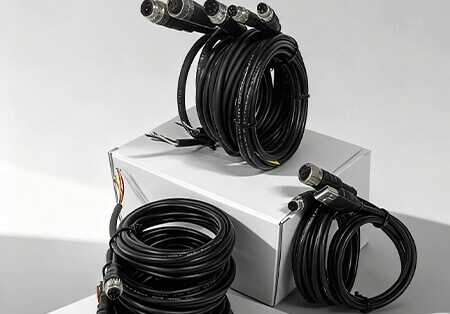
The customer TecnoEquip S.A. supplied wiring assemblies for municipal monitoring equipment and small energy-storage cabinets. Its custom harness combined power and signal circuits in one assembly and included multi-pin connectors, branch wires, strain-relief jackets, and identification labels. The installation environment involved outdoor dust, continuous vibration, and temperatures from -20°C to +65°C.
The original supplier accepted photographs and verbal descriptions as the basis for sampling. Because the sample looked correct, the customer approved it without a controlled drawing, complete pinout table, BOM, or matched inspection record.
The problems appeared after the first 50,000-piece production batch reached Argentina. During equipment assembly, the customer found intermittent signal loss, cable heating, dimensional differences, insufficient terminal plating for vibration conditions, undersized conductors in some batches, and branch and strain-relief details that did not match the approved sample. The supplier had also changed an outsourced terminal source without written approval.
More than 3,000 completed machines required disassembly and rework, while cross-border returns were difficult. An appearance-matched sample had clearly failed to function as a production specification.
How the Customer Re-Selected Its Wiring Harness Supplier
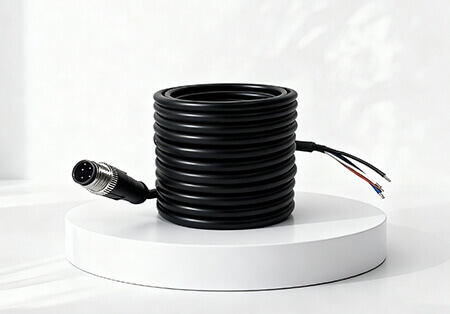
Instead of looking for another low-price factory, the customer rebuilt its qualification process around repeatability from sampling through regular monthly orders.
Step 1: Clarify Requirements Before Quotation
When the customer approached Huajunxin, it initially provided photographs and a damaged old harness. Huajunxin did not move directly to a final quotation. The engineering team first requested the technical information needed to define the product correctly.
The review covered application, installation space, voltage and current, connector part numbers, pinout, branch dimensions, cable and jacket requirements, labels, temperature range, mechanical stress, required tests, and expected monthly volume.
Tests reflected the earlier failure risks, including continuity, polarity, insulation resistance, terminal pull force, and vibration. Huajunxin also identified two design risks before sampling: the connector locking structure could loosen under heat and vibration, and the cable bend radius was too small for long-term service. Both were adjusted before tooling.
Step 2: Review Experience, Factory Capability, and Supply Continuity
The next step was to determine whether the supplier could support not only a successful sample, but also 70,000-80,000 pieces every month.
The customer reviewed experience with comparable automotive or outdoor industrial harnesses, then evaluated key processes such as cutting, stripping, crimping, overmolding, assembly, and final inspection.
Externally sourced connectors could still be used, but incoming inspection needed to control terminal dimensions, plating, lot numbers, and substitutions.
The review also covered connector lead times, safety-stock planning, monthly capacity, and responses to upstream shortages.
This step was important because high-volume supply depends on more than nominal production capacity. A supplier also needs control over critical processes and a plan for component availability.
Step 3: Build and Sign Off the Production Baseline
After the requirements were clarified, Huajunxin converted them into one controlled production baseline. The documentation included a V1.0 drawing, complete BOM, pinout table, test specification, material requirements, dimensional requirements, and an approved physical sample.
The engineering sample was not approved by appearance alone. It was supplied with measured continuity, insulation-resistance, and terminal pull-force records.
After receiving the sample, the customer completed power-up, vibration, and temperature testing in Argentina. Both parties signed off the physical sample, while the drawing, BOM, test records, and retained sample together defined the approved production version.
The earlier failure had shown that appearance alone could not control hidden specifications or later substitutions.
Step 4: Validate Trial Batch
A signed engineering sample still could not prove that the supplier could reproduce the same result at volume. Instead of moving directly to the full monthly demand, the customer released a 12,000-piece trial order.
The trial batch used the same materials, connectors, crimp settings, tooling, assembly methods, and inspection flow planned for normal mass production. Production records and outgoing test reports were retained for the batch.
After arrival in Argentina, the customer carried out incoming inspection to confirm that the assemblies matched the signed sample and controlled technical baseline. The trial also validated packaging, shipping schedules, export documentation, import coordination, and technical communication.
Once the trial was accepted, the program moved to 70,000-80,000 pieces per month, normally shipped in two or three lots.
This step separated a successful engineering sample from a repeatable production process.
Step 5: Control Changes and Traceability During Mass Production
Supplier selection did not end when the trial order passed. The next challenge was keeping repeat orders aligned with the approved production baseline.
One rule became especially important: no silent substitutions.
If a connector, terminal, conductor, jacket material, or other critical component needed to change, Huajunxin had to issue an engineering change request before production. The request explained the reason, compared the old and new materials, described possible performance effects, and included supporting test data when necessary.
Production could begin only after written customer approval. The drawing revision, BOM, sample status, and shipping documents then had to reflect the same approved version.
Each shipment also carried batch information covering material lot numbers, key process records, and final electrical inspection. Drawing revisions were marked on outer cartons and shipping documents to reduce version drift. Drawing changes and quality exceptions were also recorded by email through a fixed technical contact.
Why the Customer Chose Huajunxin
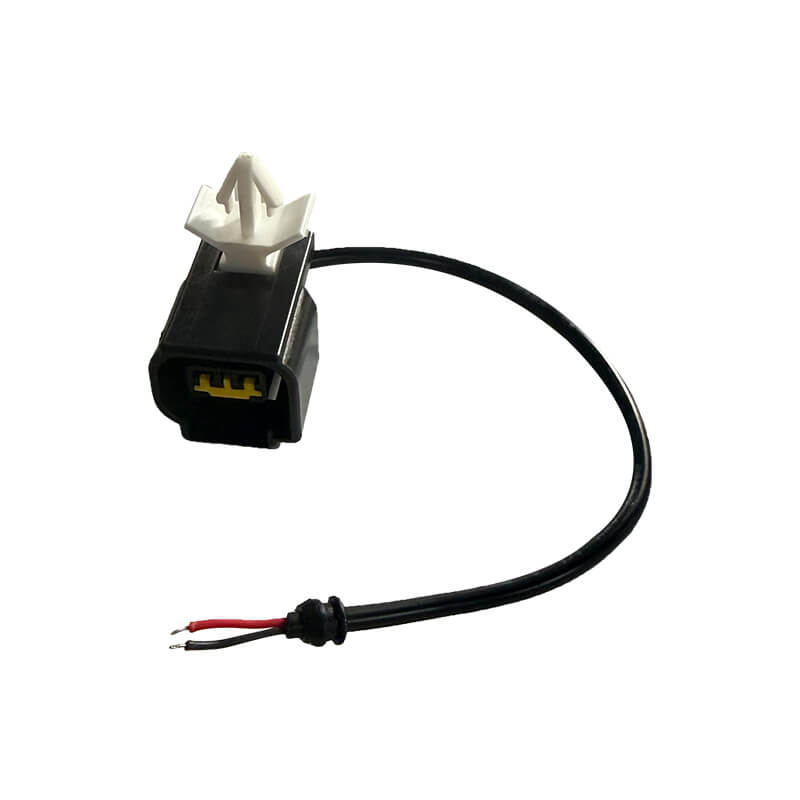
The customer did not select Huajunxin because it offered the lowest initial price or simply produced a fast-looking sample.
The decision was based on identifying missing requirements and design risks, documenting the production baseline, validating a real trial batch, and controlling later engineering changes. The customer was evaluating whether the same technical standard could be maintained through repeated mass production.
For a high-volume custom industrial wiring harness program, this repeatability can be more important than a small difference in initial unit price.
Results After Supplier Re-Selection
After the new cooperation process was established, the customer maintained stable deliveries for 14 consecutive months at 70,000-80,000 pieces per month. The batch defect rate remained below 0.3%, and the earlier field failure did not repeat.
The project also records lower local repair requirements and connector safety-stock planning. More importantly, equipment requirements were converted into a controlled specification consistent across sampling, trial production, mass production, and repeat orders.
Three Procurement Lessons from This Project
1. A Product Photograph Is Not a Production Specification
A photograph can show appearance and approximate layout, but it cannot reliably define conductor size, terminal plating, crimp quality, insulation material, pinout, internal routing, or locking performance.
For industrial wiring harness sourcing, controlled drawings, BOMs, pinout tables, test criteria, and signed samples should define the production standard.
2. A Successful Sample Does Not Prove Volume Consistency
A production-like trial order should confirm that approved materials, tooling, crimp settings, assembly methods, inspection procedures, documentation, and packaging can be repeated at scale.
The 12,000-piece trial order in this project provided the bridge between engineering sample approval and regular 70,000-80,000-piece monthly production.
3. Engineering Changes Should Always Be Controlled in Writing
Connector, terminal, conductor, or material substitutions should follow a written engineering change process before entering production, especially for cross-border projects where late discovery can make rework and returns difficult.
The approved drawing, BOM, test records, and shipment documentation should remain aligned throughout repeat production.
Conclusion
This Argentine project shows why custom industrial wiring harness procurement is a technical validation process rather than a simple price comparison.
The first sourcing process failed because an appearance-matched sample was treated as a production standard. The second process created a controlled path from requirement clarification and factory review to signed samples, a 12,000-piece production trial, written change control, and repeat-order traceability.
For industrial buyers, the key question is not only whether a supplier can make a sample. It is whether the supplier can turn application requirements into a controlled specification and reproduce that specification consistently across every production batch.
For a technical review of your next custom industrial wiring harness project, contact Huajunxin with your application, drawing, pinout, operating conditions, and test requirements.
FAQ
Q: What should be reviewed before quoting a custom industrial wiring harness?
The supplier should confirm the application, installation space, voltage and current, connector part numbers, pinout, branch dimensions, materials, labels, operating environment, mechanical stress, test requirements, and expected production volume.
Q: Why is a signed wiring harness sample not enough by itself?
A: A signed sample establishes a physical reference, but repeat production also needs a controlled drawing, BOM, pinout definition, material requirements, test criteria, and revision control.
Q: How should a wiring harness supplier handle a material substitution?
A: The supplier should submit a written engineering change request explaining the reason for the change, comparing old and new specifications, evaluating possible risks, and providing supporting test data when necessary. Production should begin only after customer approval.
 Address: A203, Building 3, Xinsheng Community, Longgang Subdistrict, Longgang District, Shenzhen, Guangdong Province


