


A custom automotive wire harness must be designed around its real application environment. Engine-bay heat, continuous vibration, moisture, unsuitable wire gauge, weak terminal connections, and aging insulation can cause intermittent faults, voltage drop, overheating, or short circuits. Reliable performance comes from matching the conductor, insulation, connector, sealing structure, routing, and validation method to the vehicle circuit.
Why Automotive Wire Harnesses Fail in Real Applications
Heat accelerates insulation aging
Heat affects more than the cable jacket. Conductors, terminals, seals, and connector housings expand and contract at different rates, while sustained current creates additional internal heating. If the selected insulation does not suit the location, it may harden, soften, shrink, or crack near bends and connector exits.
Vibration damages terminals and conductors
Road vibration repeatedly loads crimps, locking tabs, clips, and unsupported cable sections. Small movements can loosen a terminal or fatigue conductor strands beneath an intact jacket, producing a fault that appears only while the vehicle is moving.
Proper clips, protective tubing, strain relief, and routing reduce this movement. They also prevent the harness from rubbing against brackets or body panels until the insulation wears through.
Poor connections create resistance and heat
An incomplete crimp, mismatched terminal, oxidized contact surface, or connector that is not fully locked can create concentrated resistance. Under load, that resistance becomes a hot spot and may accelerate seal deformation, insulation aging, and further contact deterioration.
Moisture and abrasion break down protection
Rain, condensation, dust, road splash, and oil contamination can reach a circuit through damaged insulation, an unsuitable connector, or an unsealed cable exit. Moisture can promote corrosion, while abrasion opens a direct path to the conductor.
Root Causes Behind Common Wire Harness Problems
Materials that do not match the environment
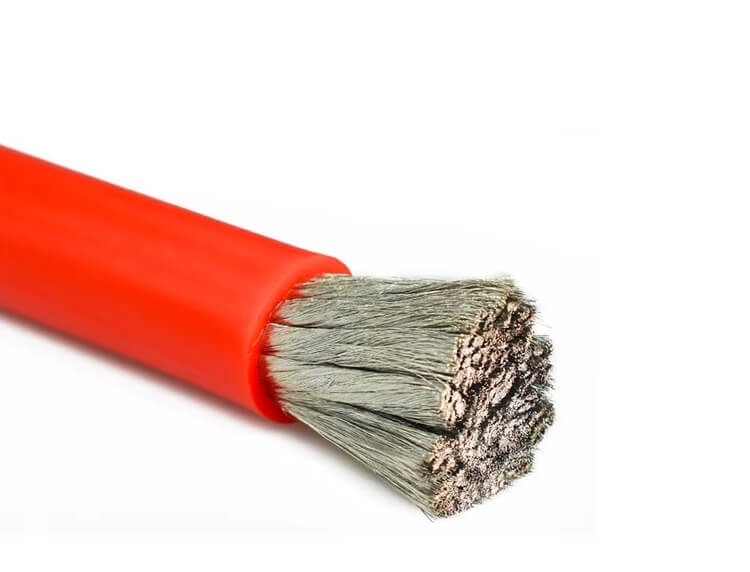
Material selection should consider temperature, flexibility, moisture, abrasion, and installation space together. Huajunxin uses PVC, TPE, and silicone among available cable materials, but these materials should not be treated as interchangeable because each finished construction has its own operating limits.
Incorrect wire gauge and circuit protection
Wire gauge depends on continuous current, peak load, cable length, ambient temperature, bundle size, acceptable voltage drop, and terminal capacity. Selecting a conductor from current alone can overlook heat accumulation and voltage loss along a long route.
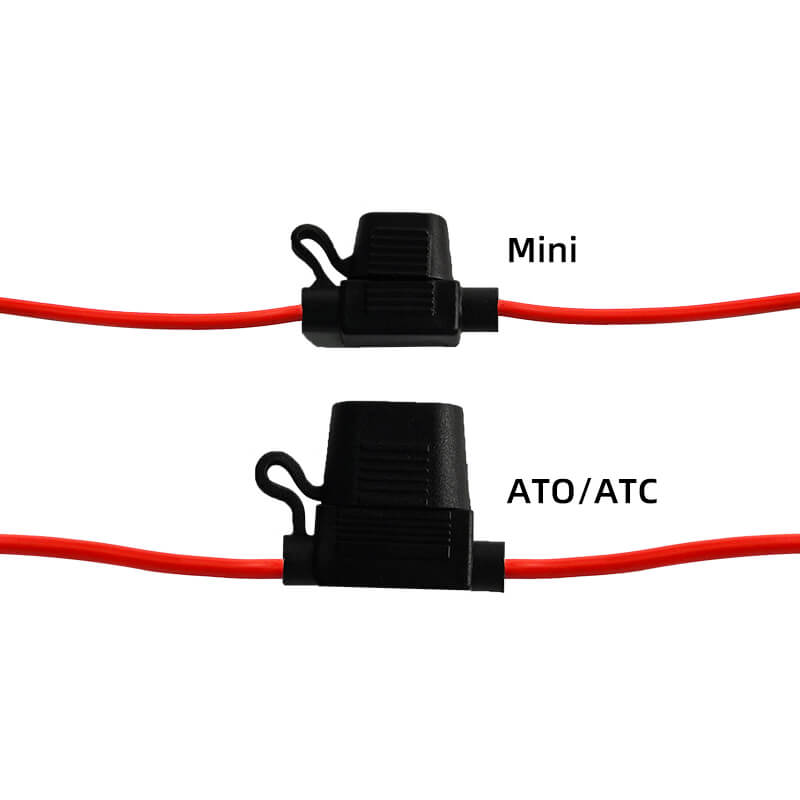
For protected auxiliary circuits, the automotive waterproof fuse holder harness is specified for 12-24V DC systems, standard or mini blade fuses from 5A to 30A, and wire options from 12 to 22 AWG. The fuse rating, wire gauge, and connected device must be selected as one coordinated circuit.
Weak crimping and terminal fit
A reliable crimp must secure the conductor without cutting strands and support the insulation without crushing it. Terminal dimensions, plating, connector cavities, and cable outside diameter must also be compatible; otherwise the assembly may pass a simple continuity check yet fail after vibration or temperature cycling.
Poor routing and insufficient fixing
A harness that is too short places tension on terminals, while one that is too long creates loops that can move and chafe. Sharp bends concentrate mechanical stress, and routing beside hot or moving components increases exposure unnecessarily.
How to Select a Custom Automotive Wire Harness
Match the harness to its application scenario
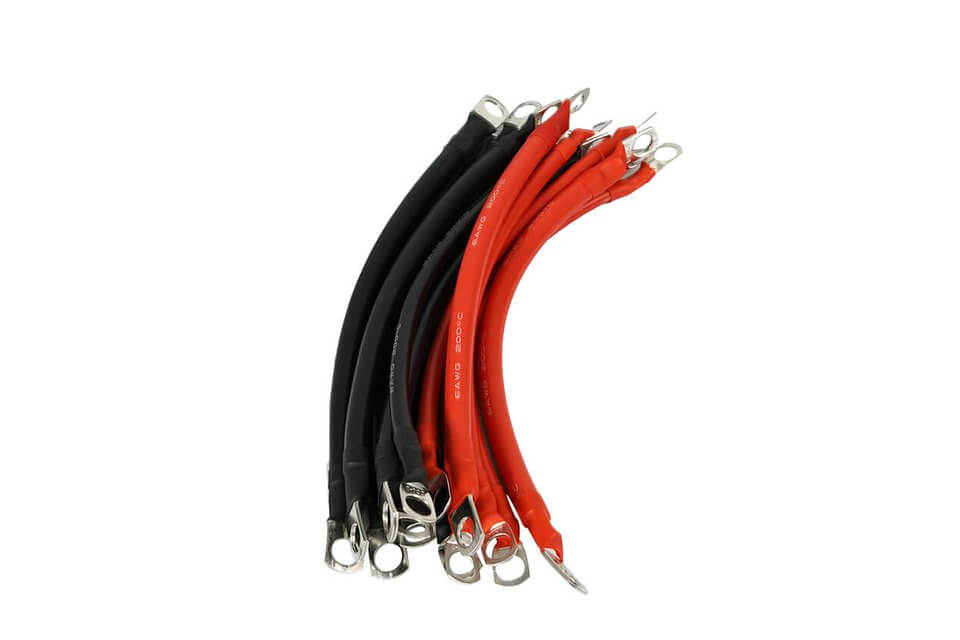
Engine-bay circuits prioritize heat exposure, vibration control, abrasion protection, and secure connector locking. Battery and auxiliary power connections place greater emphasis on conductor size, terminal geometry, polarity identification, voltage drop, and protection at the joint.
Lighting and accessory circuits need correctly rated fuses and maintainable connections. Moisture-exposed circuits require suitable seals, while sensor and low-power signal connections need stable contacts and careful separation from sources of electrical noise.
Choose the appropriate conductor and insulation
Begin with circuit voltage, continuous and peak current, route length, installation temperature, and allowable voltage drop. Then evaluate insulation material, flexibility, abrasion exposure, cable bundling, and the way the harness will be fixed.
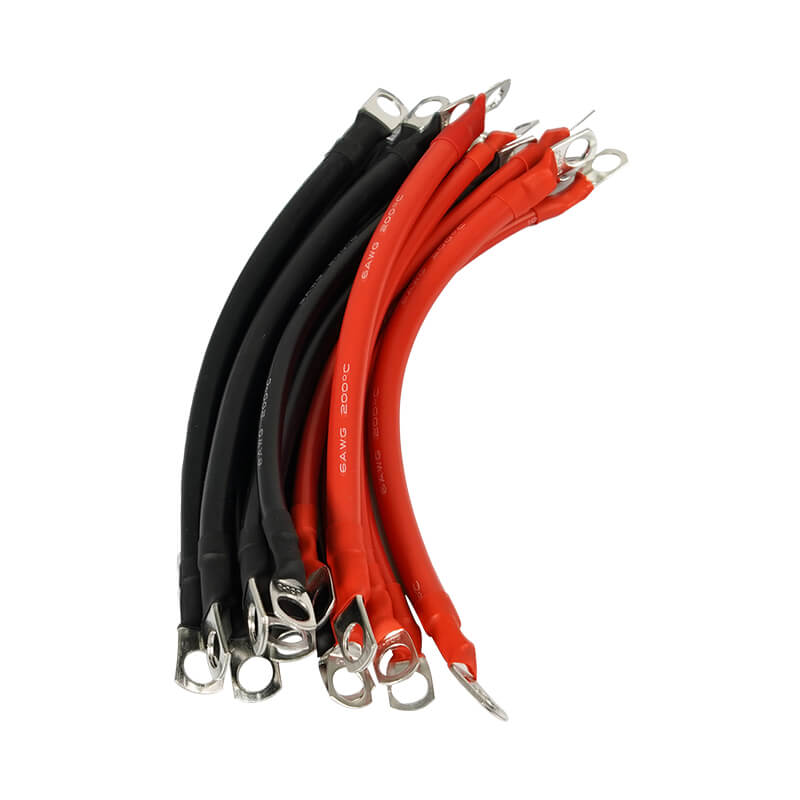
Published product data should be applied only to the named product. For example, Huajunxin lists 10, 8, 6, and 4 AWG options for its battery connection cable, while its standard IP67 connection cable uses 20 to 26 AWG for lower-current power and signal transmission.
Match connectors, terminals, and sealing
A custom automotive wire harness should use connector and terminal interfaces suited to the actual circuit and installation. Pin count, polarity, terminal hole diameter, cable seal size, locking method, and maintenance access all influence long-term reliability.
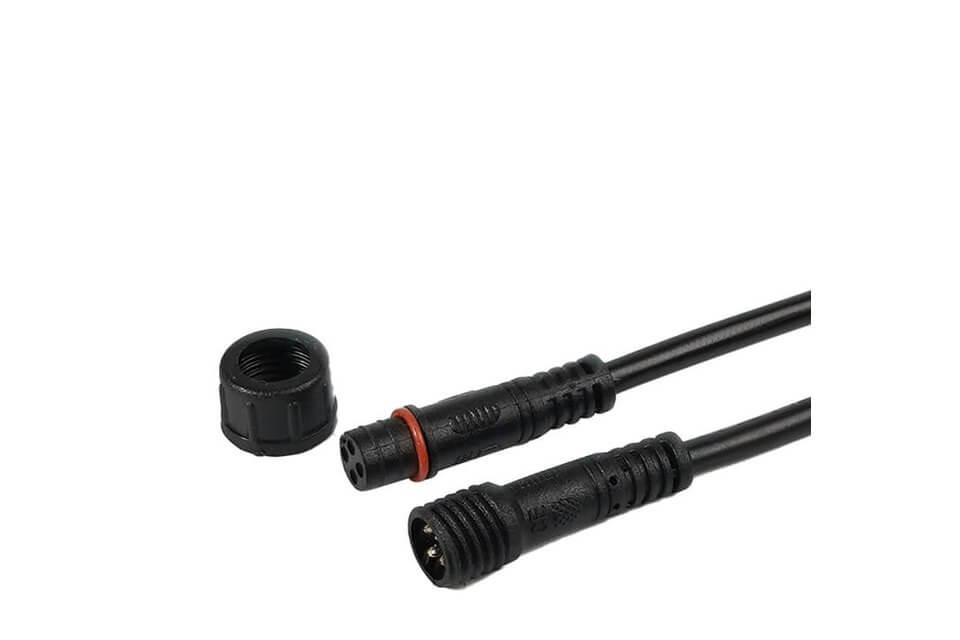
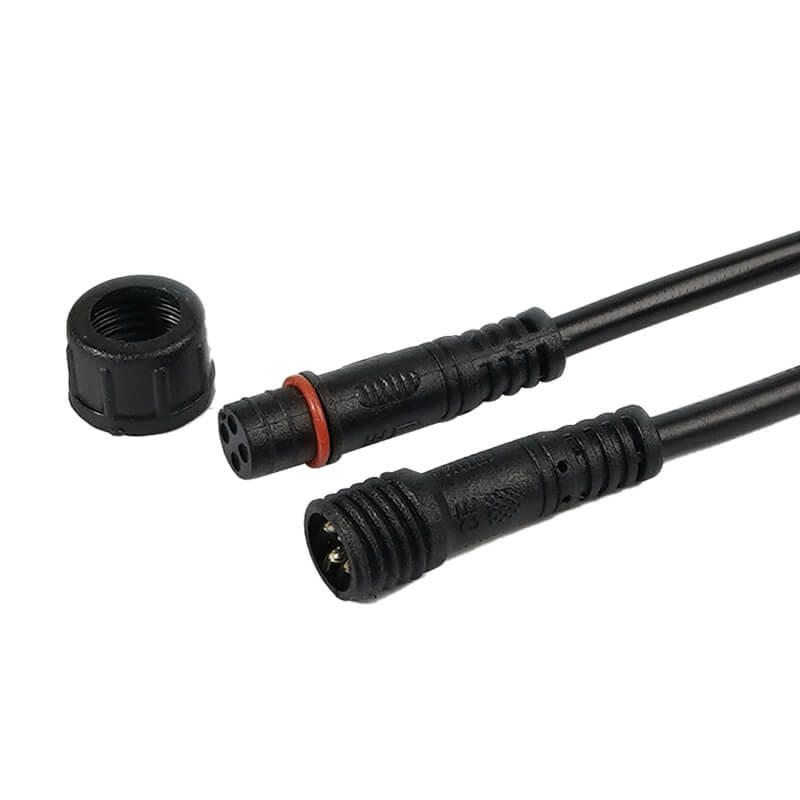
For wet or dusty locations, the IP67 waterproof connection cable uses an O-ring seal and threaded locking structure in 2-, 3-, or 4-core configurations. Its standard IP67 rating is intended for rain, moisture, and dust exposure, but it should not be interpreted as approval for permanent underwater use.
Plan for vibration and mechanical stress
Ensure strain relief is provided for at exit points of the connectors and ensure support for the cable weight before it reaches the terminal. Make sure that sufficient bend space is provided, passage areas near sharp edges are protected, and that the harness stays away from the exhaust system, rotating machinery, and pinch points.
Threaded lock, positive connector latch, clip, corrugated tubing, and heat shrink are all different protective measures that should be applied depending on the path.
How Huajunxin Addresses Wire Harness Reliability
OEM/ODM and private-label customization
Huajunxin supports OEM/ODM for automotive and related cable assemblies. Depending on the project, buyers can specify cable length, wire gauge, conductor specifications, color, jacket material, connector and terminal interfaces, core count, printing or labeling, and packaging.
Controlled terminal and protection details
Relevant products include copper or tinned-copper conductors, heat-shrink insulation at battery cable joints, threaded waterproof connector locks, polarity identification, and blade-fuse circuit protection. Each feature solves a specific problem.
Validation based on actual circuit conditions
A suitable validation plan include continuity, contact-resistance, loaded voltage-drop, insulation, and temperature-rise checks. Our mechanical evaluation examine terminal retention, connector locking, repeated bending, abrasion, and vibration at the intended fixing points.
Conclusion
A reliable custom automotive wire harness is not defined by cable thickness alone. Its value comes from matching every conductor, terminal, seal, protective layer, and fixing point to the real electrical load and operating environment.
Huajunxin integrates wire and cable production, R&D, and sales, and supports direct OEM/ODM projects for automotive and new-energy wiring applications. Custom options may include cable length, wire gauge, conductor configuration, color, PVC, PE, TPE, silicone, or rubber materials, connector and terminal structures, core count, logo printing, labeling, and bulk or retail packaging.
Contact us today to discuss your OEM/ODM automotive wire harness project, submit drawings or samples, and request a customized quotation.
FAQ
Q: What causes an automotive wire harness to overheat?
A: The most frequent causes are small gauge wires, lengthy cables, high temperatures, cables tied together, loose connections, bad crimping, corrosion, and incorrect matching between the fuse or connector and the load. Voltage drop, contact resistance, load, cable routing, and temperatures need to be considered while testing.nd temperature under realistic operating conditions.
Q: How should wire gauge be selected for a custom automotive wire harness?
A: Wire gauge should reflect continuous current, peak-current duration, route length, ambient temperature, bundle size, terminal capacity, and acceptable voltage drop. A general ampacity value is only a starting point. The finished circuit should be checked under its expected load and installation conditions.
Q: When should an automotive wire harness use IP65 or IP67 protection?
A: IP65 is appropriate where a closed enclosure must resist dust and water jets or routine rain exposure. IP67 adds protection against temporary immersion under defined test conditions. Neither rating should be treated as universal permission for permanent underwater use, and the complete mated connection must maintain the specified seal.
Q: What custom wire harness details can Huajunxin configure?
A: Huajunxin publishes options for cable length, wire gauge, conductor color, terminal type, terminal hole size, connector specification, core count, and PVC, TPE, or silicone cable material across relevant products. The available combination should be confirmed against the circuit load, environment, dimensions, and installation route.
 Address: A203, Building 3, Xinsheng Community, Longgang Subdistrict, Longgang District, Shenzhen, Guangdong Province


