


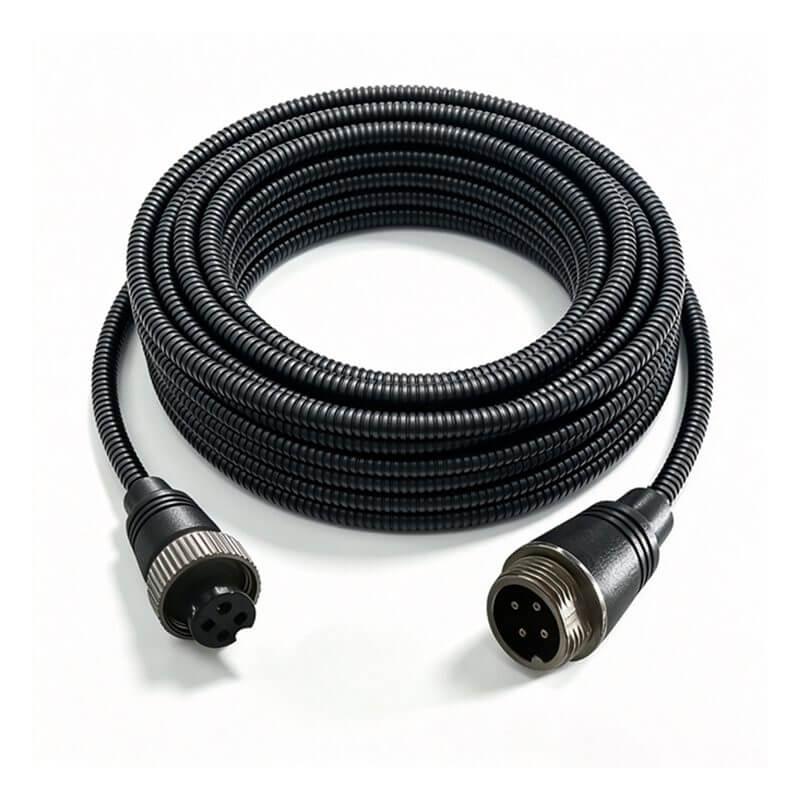
A custom automotive wire harness is a matched assembly of conductors, terminals, connectors, insulation, fuse protection, and routing features for a defined vehicle circuit. It should be selected by current, voltage, cable length, heat, vibration, moisture, and service requirements rather than by appearance alone.
The Role of a Wire Harness in a Vehicle
A vehicle harness distributes power and signals between the battery, lighting, sensors, accessory equipment, charging points, and control devices. It also manages how those circuits are protected, disconnected, routed, and maintained inside limited installation space.
Non-standard harnesses become necessary when a vehicle has unusual connector positions, a special terminal hole, a defined cable length, a combined fuse holder, a waterproof connection, or different current demands across several zones. A practical design reduces rework because the electrical and mechanical requirements are defined before the assembly is installed.
Custom Automotive Wire Harness Design Responses
Heat and Insulation Aging
Heat can harden or age insulation when a cable is routed near an engine compartment or another warm area. In high-current battery cable applications, PVC can suit -20°C to 85°C environments, while silicone can suit -40°C to 105°C. The material should be matched to the installation zone instead of chosen only by price or color.
Vibration, Terminals, and Copper Strands
Road vibration can loosen weak crimps, damage copper strands near a terminal, and increase contact resistance. Correct terminal fit, stable crimping, suitable bend relief, and strain control are important for battery leads, lighting circuits, and connectors that are serviced repeatedly.
Crimping and Connection Mismatch
A terminal hole that does not match the stud, a connector with the wrong gender, or a fuse holder that does not suit the selected wire can create heating and maintenance problems. Drawings and samples should identify terminal size, connector direction, polarity, wire gauge, fuse position, and cable length before a harness is released.
Moisture, Dust, and Abrasion
Moisture and dust are common concerns around exposed sensors, lights, battery compartments, and exterior accessories. Routing should also prevent the cable jacket from rubbing against sharp edges or moving parts. IP protection helps, but it cannot replace proper mechanical routing and sealing.
Core Technical Selection Standards
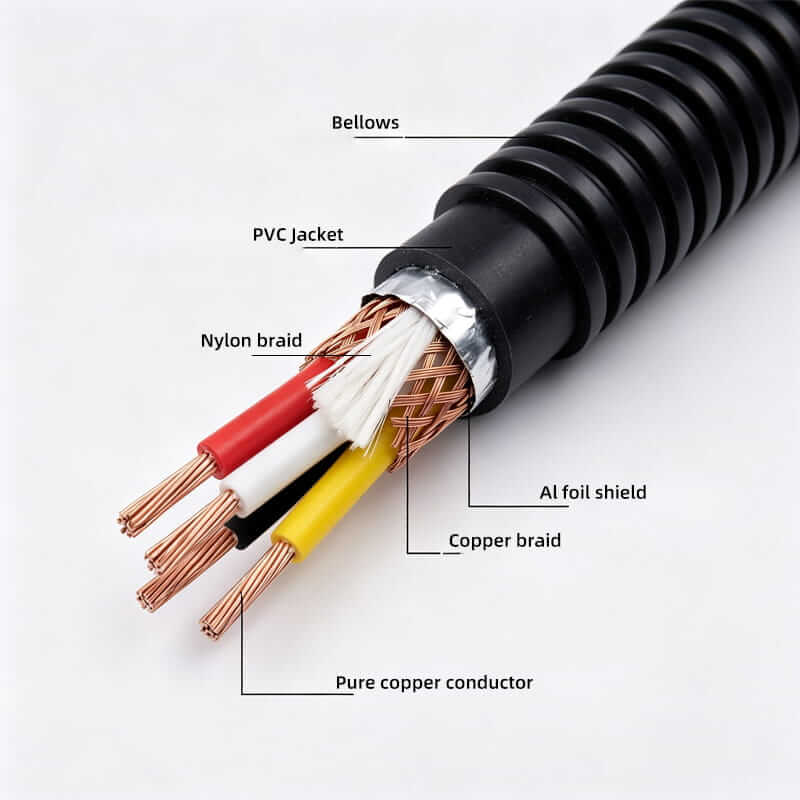
AWG Selection by Load and Application
AWG selection should consider current, cable length, acceptable voltage drop, ambient temperature, bundling, and routing. Battery and high-current paths usually need thicker conductors, while auxiliary circuits and sensor signal lines may use smaller gauges when their electrical load allows.
For DC 12V-24V fuse holder harnesses, 12AWG through 22AWG can pair with 5A-30A standard or mini blade fuses. High-current battery connection cables can use 10AWG, 8AWG, 6AWG, and 4AWG conductors, with ring terminal holes such as 6mm, 8mm, 10mm, and 12mm.
PVC, TPE, and Silicone Insulation
PVC is practical for many protected power leads. TPE can suit flexible routing and repeated bending, while silicone is useful where higher flexibility or a wider temperature range is needed. The final choice should reflect the engine-adjacent zone, cabin space, battery area, or sensor location.
IP65 and IP67: When the Difference Matters
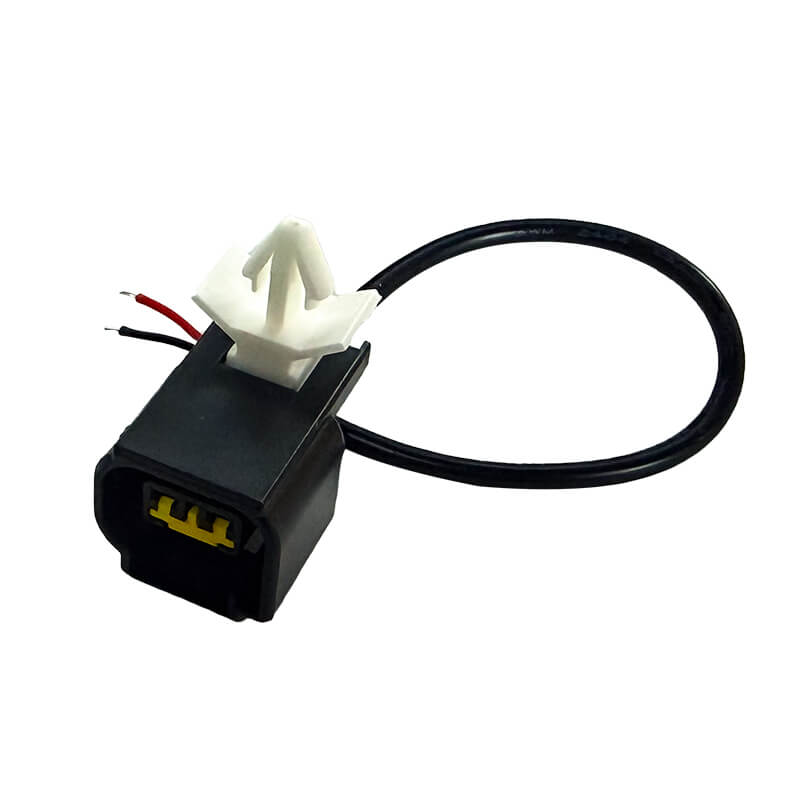
IP65 can suit dust-tight and water-jet-resistant conditions, while IP67 is intended for more severe water exposure, including temporary immersion. A covered automotive blade fuse holder harness can use IP65 protection, while an IP67 Waterproof Connection Cable is better suited to moisture-exposed low-current connections. IP68 can be customized on waterproof connector assemblies when the use condition requires it.
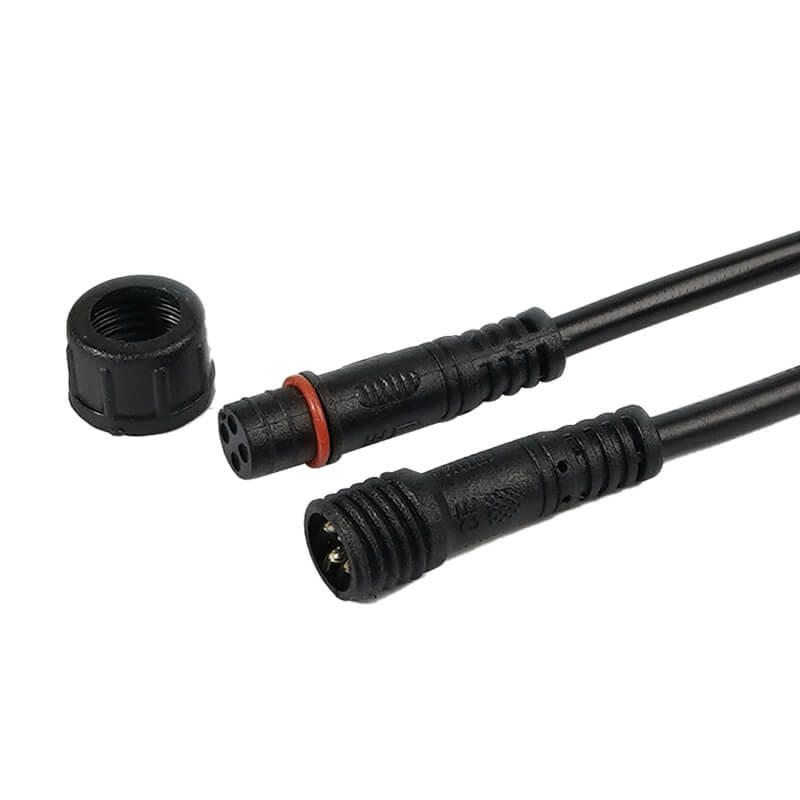
A compact waterproof cable can use 2, 3, or 4 cores, 20AWG-26AWG wire, 30V AC/DC standard voltage, 2A-5A current, contact resistance no higher than 5mΩ, insulation resistance of at least 1000MΩ, and a working temperature of -20°C to +80°C. These values fit signal and low-current waterproof wiring better than heavy battery current.
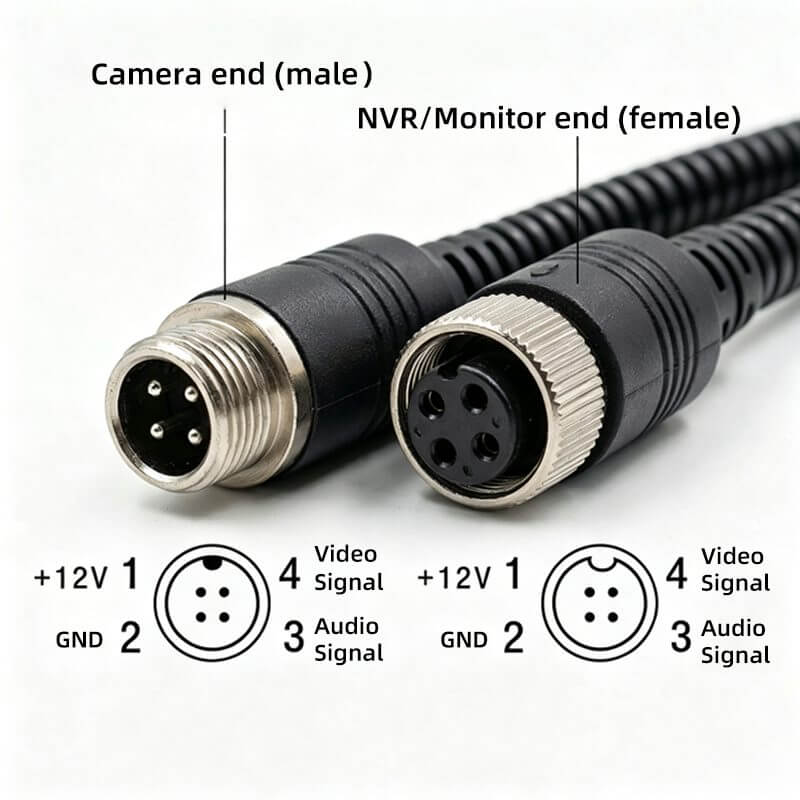
Zone-Based Vehicle Design
The engine compartment needs heat-aware insulation and secure routing. The battery area needs suitable AWG size, terminal fit, and fuse protection. Lighting and accessory circuits often benefit from serviceable connectors, while sensor lines usually prioritize compact routing, stable contacts, and moisture protection.
OEM/ODM Customization and Reliability Checks
A Practical Customization Flow
An OEM/ODM project normally begins by translating a drawing, sample, or installation requirement into an electrical and mechanical specification. The specification should cover voltage, current, AWG, length, number of cores, connector type, terminal hole, fuse rating, IP level, insulation, polarity, and routing direction.
Huajunxin custom cable projects can be developed around battery cables, SAE power cables, waterproof cables, EC5 cables, and fuse holder harnesses. Packaging, labels, and appearance requirements can be included when they help assembly teams distinguish variants clearly.
The Automotive Waterproof Blade Fuse Holder Harness fits protected 12V-24V accessory circuits where a covered blade fuse and defined wire gauge are needed.
Electrical, Structural, and Identification Details
The electrical section should define rated voltage, current range, fuse position, conductor gauge, and polarity. The structural section should define terminal geometry, connector gender, cable length, bend direction, sealing cover, strain relief, and installation clearance. Identification and packaging should make it easy to distinguish variants without relying on memory during assembly.
Reliability Verification Before Release
A responsible release checklist may include continuity and polarity checks, terminal fit, crimp retention, contact resistance, insulation resistance, fuse protection, connector sealing, temperature suitability, and flex or abrasion review.
The test matrix should match the selected harness and environment. A waterproof sensor cable, battery lead, and emergency jump-start cable do not need identical validation. The supplier should connect the sample, drawing, inspection points, and packaging.
Common Selection Mistakes in Custom Automotive Wire Harness
Choosing Wire Size by Appearance
A thick-looking jacket does not automatically mean a larger conductor. Confirm the actual AWG, conductor material, cable length, current demand, voltage drop, and fuse rating. A wire that is too small can run hot, while an unnecessarily large wire can create routing and assembly problems.
Overusing Waterproof Ratings
IP67 is not automatically the best choice for every circuit. Using a higher rating in an enclosed cabin area may add stiffness and cost without improving the real installation. Select IP65 or IP67 according to exposure, then confirm that the connector, seal, cover, and cable jacket work as one system.
Low-Price Omissions
A low initial cost may reflect omitted strain relief, simpler terminals, less defined sealing, weaker identification, or a fuse holder that is difficult to service. The meaningful comparison is the complete assembly and its inspection points, not the cable alone.
Drawings, Samples, and Pre-Production Checks
A clear custom brief should include the drawing or sample, voltage, current, wire gauge, length, terminal hole, connector style, core count, fuse requirement, IP target, temperature, installation zone, and packaging variant. Before release, check fit, polarity, continuity, terminal seating, routing, sealing, and label consistency on the sample.
Conclusion
A reliable custom automotive wire harness comes from matching the assembly to the operating condition, electrical load, installation zone, and maintenance routine. AWG, insulation, terminals, fuse protection, connector sealing, and routing should be treated as one design rather than separate purchasing items.
Huajunxin supports vehicle wiring projects across battery connection cables, SAE power leads, waterproof connector cables, EC5 jump-start cables, and fuse holder harnesses. Review Huajunxin automotive cable solutions to match the next vehicle wiring design with a suitable structure and protection level.
FAQ
Q: What information is needed for a custom automotive wire harness?
A: Define voltage, current, AWG, length, connector type, terminal hole, core count, polarity, fuse rating, IP level, insulation, temperature, routing zone, and packaging variant. A drawing or physical sample is also useful because it shows fit, bend direction, and connection position that a text description may miss.
Q: Should the same wire gauge be used for battery, accessory, and sensor circuits?
A: No. Battery and high-current circuits generally need thicker conductors, while low-current accessory or sensor circuits may use smaller gauges when their load and voltage-drop limits allow. The correct AWG depends on current, length, temperature, bundling, and fuse protection, not on the vehicle category alone.
Q: Is IP67 always better than IP65 for automotive wiring?
A: No. IP65 can suit dust-tight and water-jet-resistant conditions, while IP67 is more appropriate for stronger water exposure or temporary immersion. The correct rating depends on the installation zone. A higher rating may add cost and stiffness when the vehicle circuit is already enclosed.
Q: What should be checked before releasing a harness for batch production?
A: Check the sample against the drawing for connector fit, terminal seating, polarity, continuity, cable length, fuse position, routing, sealing, labels, and packaging. The exact reliability tests should match the assembly and environment. Do not assume that a general cable specification proves performance for every vehicle application.
 Address: A203, Building 3, Xinsheng Community, Longgang Subdistrict, Longgang District, Shenzhen, Guangdong Province


